
TJ Park
Principal Physiotherapist

Have you ever felt a dull ache near your elbow, knee, or heel that just won't go away? You're not alone. Tendinopathy is one of the most common causes of persistent pain in active people — and even in those who sit all day. But what exactly is it, and why does it happen? At Good Physio, we believe understanding your condition is the first step toward real recovery.
What Is Tendinopathy?
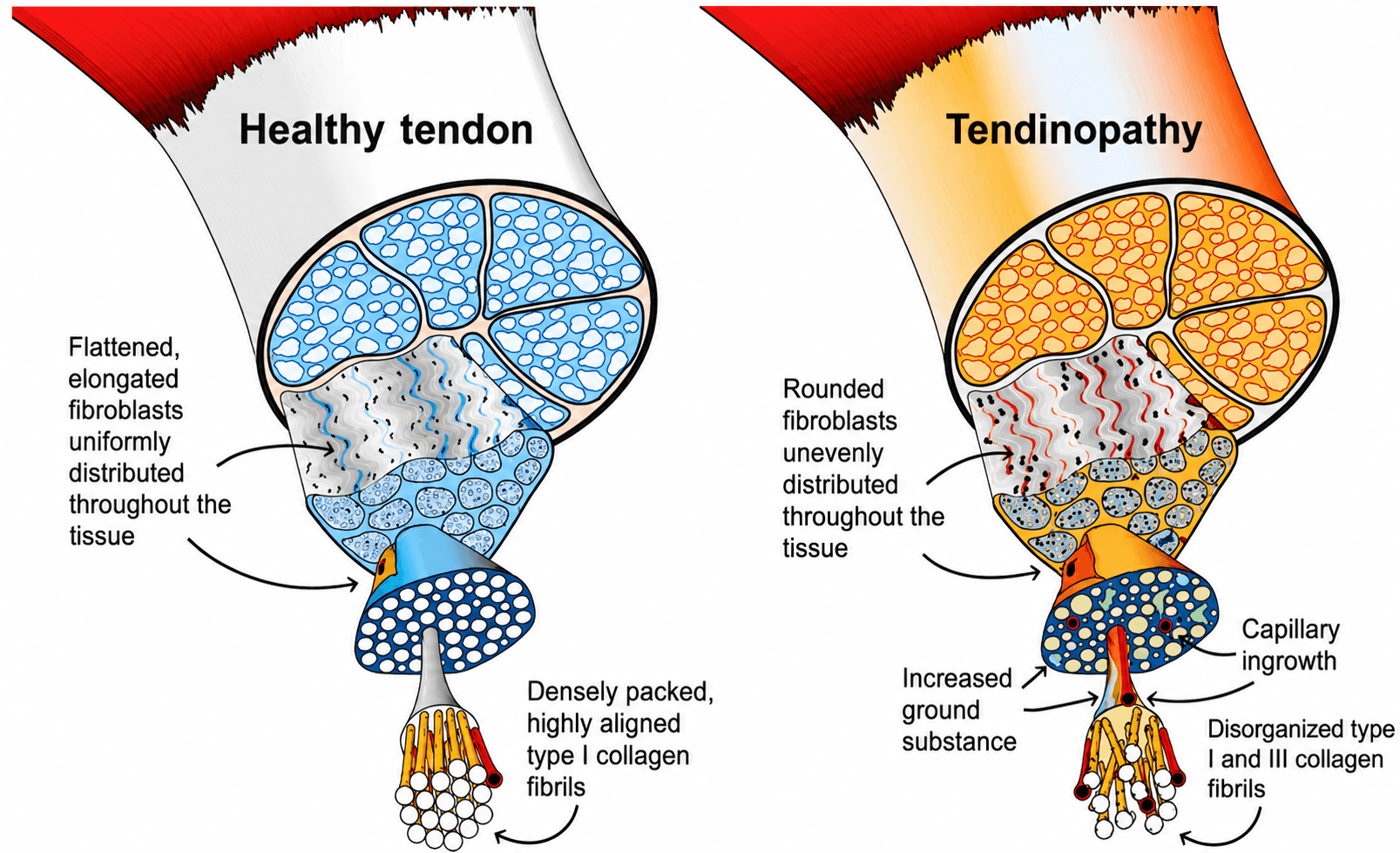
Tendinopathy is an umbrella term that describes a problem with a tendon — typically involving pain, thickening, and reduced function. It used to be called "tendinitis," which implies inflammation, but we now know it's often more complex than simple inflammation.
It can affect many parts of the body, but the most common areas include:
Achilles tendon (back of the ankle)
Patellar tendon (Jumper's knee: front of the knee)
Lateral elbow tendon (tennis elbow: outer side of elbow)
Rotator cuff tendons (shoulder)
Why Do Tendons Get Sore?
Tendons are tough, fibrous tissues that connect muscles to bones and help us move. They love consistent loading — like walking, lifting, or running at a manageable intensity. But problems arise when there's either:
Too much load too quickly (e.g., a sudden spike in training or repetitive work)
Too little load over time (e.g., long periods of inactivity or poor movement patterns)
These changes can lead to small-scale degeneration in the tendon, causing:
Pain during or after activity
Morning stiffness or tightness
Tenderness to touch
Loss of strength or performance
Is Tendinopathy Caused by Inflammation?
Not exactly. While inflammation can play a role, most tendinopathies are not driven by inflammation alone. Instead, the tendon structure becomes disorganised due to overload. That's why anti-inflammatory treatments like ice or medication don't always work long-term.
How We Treat Tendinopathy at Good Physio
1. Accurate Diagnosis
Not all tendon pain is the same. We begin by identifying which tendon is involved, and whether you're in the reactive (early), dysrepair (subchronic), or degenerative (chronic) stage.
2. Progressive Loading Programme
One of the most effective treatments for tendinopathy is a structured, progressive loading programme — carefully designed exercises that rebuild tendon capacity. In particular, Heavy Slow Resistance (HSR) training is proven to improve tendon capacity, exercise tolerance, muscular strength, and patient satisfaction. We'll share more about HSR training in a future blog.
3. Modify, Don't Stop
Complete rest usually doesn't help. Instead, we guide you on how to stay active without making things worse. Load management is key.
4. Manual Therapy When Needed
Some cases benefit from hands-on treatment, particularly if surrounding muscles and joints are compensating or stiff.
5. Supportive Therapies
In early or painful stages, treatments like night wraps or topical agents (more on this in our next blog!) can help reduce symptoms and support healing.
6. Referral If Needed
Some cases benefit from referral for multidisciplinary management for the best outcome. Current evidence does not support corticosteroid injection for treating tendinopathy in clinical practice — cortisone injections show only short-term pain relief and increase the risk of tendon rupture (Visser et al., 2024). Specialist referral for corticosteroid injection is therefore discouraged. However, physiotherapists at Good Physio can arrange ultrasound imaging and podiatrist referral (for Achilles tendinopathy) if required.
When Should You See a Physio for Tendon Pain?
If your tendon pain:
Has lasted more than 2–3 weeks,
Is affecting your daily life or sport,
Or keeps coming back —
…it's time to get it properly assessed. The sooner we catch it, the better the outcome.
Final Thoughts
Tendinopathy doesn't have to be a long-term struggle. With the right diagnosis, guidance, and exercise plan, your tendon can heal and even come back stronger. At Good Physio, we're here to help you move better, feel stronger, and stay active — pain-free.
👉 Read our next blog about Night Wraps — a simple at-home method to ease irritated tendons.
References
Sleeswijk Visser, T., van Linschoten, R., Vicenzino, B., Weir, A., & de Vos, R.-J. (2024). Terminating Corticosteroid Injection in Tendinopathy? Hasta la Vista, Baby. Journal of Orthopaedic and Sports Physical Therapy, 54(1), 10–13. https://doi.org/10.2519/jospt.2023.11875
Excerpt
Persistent tendon pain near your elbow, knee, or heel? Learn what tendinopathy is, why it happens, and how Good Physio in NZ can help you recover.


Or call 022 486 1234