
TJ Park
Principal Physiotherapist
Introduction
This blog is Tendinopathy Part 3.
For further information about tendinopathy, please read this.
Wanting to know about simple remedy for tendinopathy? please read this.
It will cover the up-to-date evidence-based exercises for tendinopathy management. Tendinopathy is one of the most common conditions seen in physiotherapy clinics, affecting areas such as the Achilles tendon, patellar tendon, and elbow tendons. Patients often ask, “What exercises will really help me recover?” Over the years, many approaches have been used—rest, stretching, eccentric loading, shockwave therapy—but one method has consistently shown strong results: Heavy Slow Resistance (HSR) Training.
Unlike traditional eccentric-only protocols, HSR focuses on controlled, high-load strength exercises performed slowly. This method not only targets tendon healing but also improves muscle strength and long-term compliance. HSR is not just another exercise trend. It is a structured, progressive way to strengthen tendons and muscles, supported by high-quality research. In this blog, we will break down what HSR is, why it works, and how it can be applied safely and effectively.
What Is Heavy Slow Resistance Training?
Heavy Slow Resistance (HSR) training is a form of strength training that uses heavy weights lifted at a deliberately slow tempo. Typically, this means:
Load: 6 – 15 RM (Repetition Maximum) Loads
Tempo: 3 seconds up + 3 seconds down = 6 seconds per repetition
Sets/Reps: 3 – 4 sets of 6 – 15 RM
Frequency: 3 sessions per week
Weeks | Sets x Reps | Intensity |
|---|---|---|
Week 1 | 3 x 15RM | Moderate |
Week 2 - 3 | 3 x 12RM | Slightly heavier |
Week 4 - 5 | 4 x 10RM | Heavier |
Week 6 - 8 | 4 x 8RM | Very challenging |
Week 9 - 12 | 4 x 6RM | Near maximal |
This method is different from traditional "quick reps" strength training because the slow movement increases time under tension, which is essential for tendon adaptation.
Why Does HSR Work for Tendinopathy?
Let's analyse this from different perspectives:
1. Biological Level (Micro)
Tendons adapt slowly compared to muscles.
Heavy and slow loading stimulates collagen remodeling, which improves tendon structure.
HSR also enhances blood flow and metabolic activity, which are often reduced in chronic tendinopathy.
2. Functional Level (Meso)
Patients gain strength, control, and confidence in the affected area.
Unlike eccentric-only programs, HSR trains both concentric and eccentric phases, which makes it more functional for daily and sports activities.
3. Long-Term Level (Macro)
Reduced pain, improved function, and lower recurrence risk.
HSR encourages patients to see rehab not as passive recovery but as an active training process.
Evidence From Research
Two high-quality randomised controlled trials (RCTs) have shaped our understanding of Heavy Slow Resistance (HSR) in tendinopathy management:
Patellar Tendinopathy (Kongsgaard et al., 2009 - Am J Sports Med)
Compared HSR with eccentric training.
Both groups improved in pain and function, but HSR patients reported greater satisfaction and long-term adherence.
HSR also produced increased tendon stiffness, supporting stronger tendon structure.
Achilles Tendinopathy (Beyer et al., 2015 - Am J Sports Med)
"Heavy Slow Resistance Versus Eccentric Training as Treatment for Achilles Tendinopathy: A Randomised Controlled Trial."
Findings: Both HSR and eccentric training improved pain and function.
However, HSR led to similar clinical outcomes with higher patient satisfaction and was easier for participants to integrate into daily life.
The study highlighted that HSR can be just as effective as eccentric loading, but often more sustainable long term.
Takeaway: HSR is not only effective across different tendons (patellar and Achilles), but it also tends to improve patient satisfaction and adherence — two critical factors for real-world success in rehabilitation.
How to Apply HSR in Practice
Patellar Tendinopathy - Heavy Slow Resistance Program
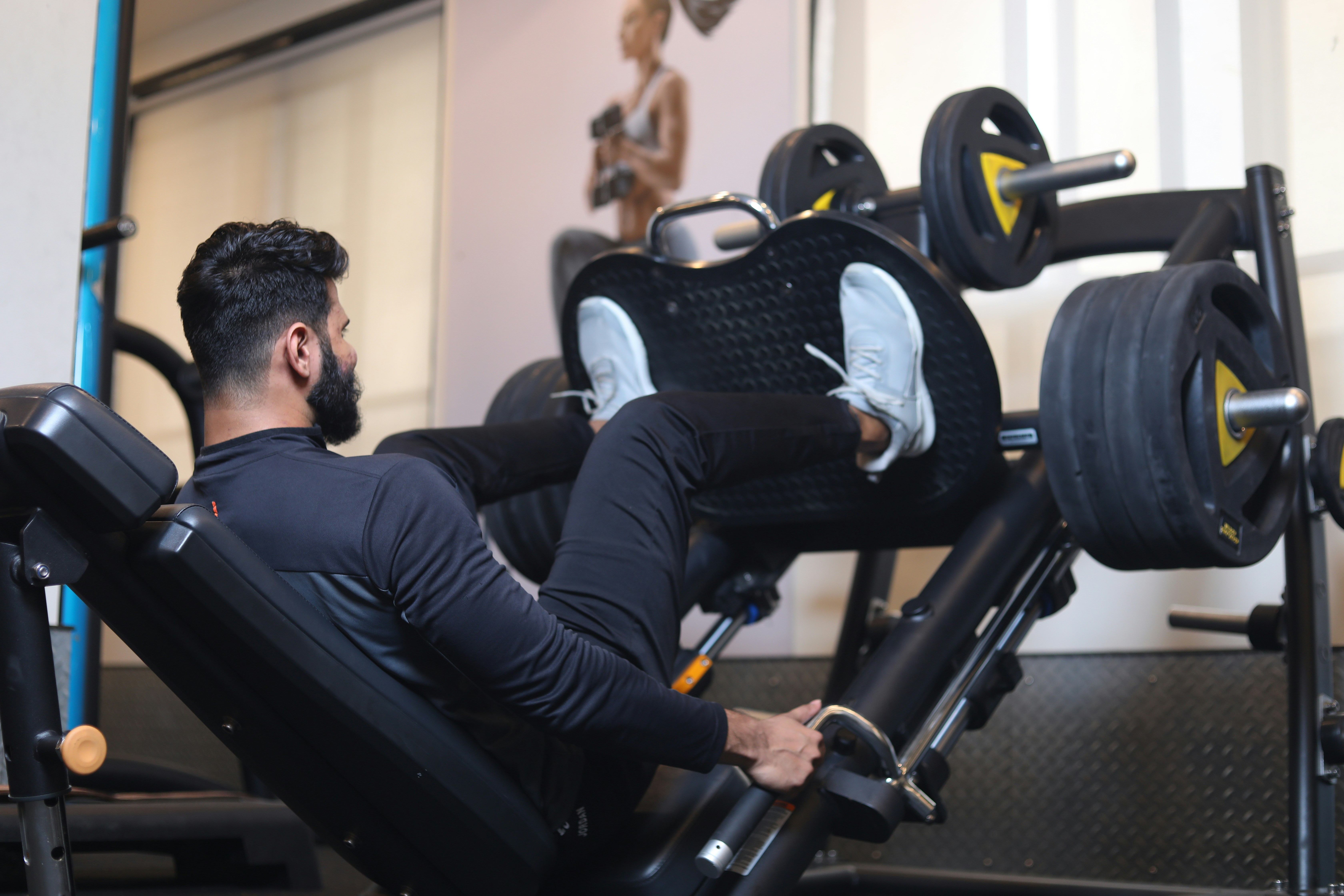
Key exercises: Squat, Hack Squat, Leg Press
Weeks | Sets x Reps | Intensity |
|---|---|---|
Week 1 | 3 x 15RM | Moderate |
Week 2 - 3 | 3 x 12RM | Slightly heavier |
Week 4 - 5 | 4 x 10RM | Heavier |
Week 6 - 8 | 4 x 8RM | Very challenging |
Week 9 - 12 | 4 x 6RM | Near maximal |
Squat: Use barbell or dumbbells, slow 3-second lowering, controlled rise.
Hack Squat: Maintain upright posture, emphasise tendon loading through slow tempo.
Leg Press: Feet shoulder-width apart, push slowly through full range without locking knees.
Achilles Tendinopathy - Heavy Slow Resistance Program
Key exercises: Standing Calf Raise, Seated Calf Raise, Calf Raise on Leg Press Machine
Weeks | Sets x Reps | Intensity |
|---|---|---|
Week 1 | 3 x 15RM | Moderate |
Week 2 - 3 | 3 x 12RM | Slightly heavier |
Week 4 - 5 | 4 x 10RM | Heavier |
Week 6 - 8 | 4 x 8RM | Very challenging |
Week 9 - 12 | 4 x 6RM | Near maximal |
Standing Calf Raise: Perform on a step for full range; lower slowly, rise with control.
Seated Calf Raise: Focuses on soleus loading; keep tempo slow and controlled.
Calf Raise on Leg Press: Push through forefoot, avoid bouncing at the bottom.
For further information and images about HSR for Achilles tendinopathy, please visit here.

Tip: Progression should be gradual. Pain during exercise is acceptable if it remains mild-to-moderate (≤4/10) and settles within 24 hours.
Common Mistakes to Avoid
Too light loads: Tendons need heavy load to adapt.
Going too fast: Quick reps reduce tendon stimulus.
Lack of progression: If weight is not increased over time, benefits plateau.
Poor monitoring: Ignoring pain response or technique can worsen symptoms.
The Future of Tendon Rehab
Looking forward, we can imagine tendon rehab evolving with AI motion analysis, wearable sensors, and personalised digital programs. But the principle will remain the same: tendons thrive on progressive, heavy, and slow loading.
At Good Physio, we see HSR as more than just an exercise—it is a philosophy of active recovery. Instead of avoiding pain and movement, we guide our patients to move with purpose, strength, and control.
Conclusion
Heavy Slow Resistance Training is not a quick fix, but it is a proven, powerful, and sustainable method to treat tendinopathy. By combining science, structured progression, and patient commitment, HSR helps restore not only tendon health but also confidence in movement.

If you’re struggling with tendon pain, consider booking an assessment at Good Physio. We can design a safe and tailored HSR program to get you moving strong again.

References
Beyer, R., Kongsgaard, M., Hougs Kjær, B., Øhlenschlæger, T., Kjær, M., & Magnusson, S. P. (2015). Heavy slow resistance versus eccentric training as treatment for Achilles tendinopathy: A randomized controlled trial. The American Journal of Sports Medicine, 43(7), 1704–1711. https://doi.org/10.1177/0363546515584760
Kongsgaard, M., Kovanen, V., Aagaard, P., Doessing, S., Hansen, P., Laursen, A. H., Kaldau, N. C., Kjaer, M., & Magnusson, S. P. (2009). Corticosteroid injections, eccentric decline squat training and heavy slow resistance training in patellar tendinopathy. The American Journal of Sports Medicine, 37(3), 504–511. https://doi.org/10.1177/0363546508326984
Excerpt
Effective tendon rehab: discover how heavy slow resistance training benefits patellar and Achilles tendinopathy with research and exercise examples.



Or call 022 486 1234